

Learning Continued, Even When Schools Couldn’t
School Without Walls:

Alternative Learning Spaces Project
Jbeil / Byblos, Lebanon
March-May 2026
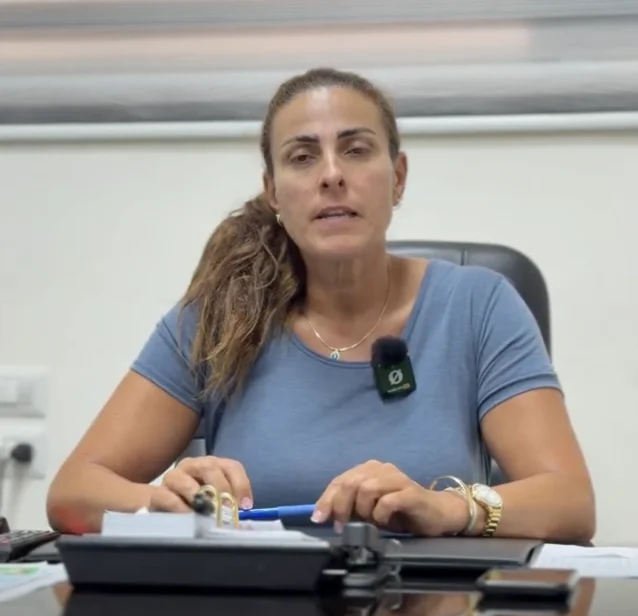
Ms. Nof Mansour Nehme
Public school, principal
Who
Ms. Nof Mansour Nehme has been the principal of a public school for seven years. Outspoken and precise in her words, she carries herself with the authority of someone accustomed to solving problems before anyone notices them. She is a mother of three school-age children and lives in Jbeil, the same city where she leads the school that educates its youngest residents. In the ancient city where the alphabet was born, Ms. Nof Mansour Nehme turned a wartime crisis into a turning point.
Where
Jbeil, known internationally as Byblos, sits on the Mediterranean coast of Lebanon. It is one of the oldest continuously inhabited cities in the world. Behind its archaeological grandeur is a living city, home to tens of thousands of residents, including the families whose children attend Nof’s school.
Byblos holds a singular place in the history of human communication. It was through this Phoenician port city that papyrus was traded to the ancient world, and it is here that scholars trace the origins of the first alphabetic writing system, the ancestor of virtually every alphabet in use today. That a story about protecting children’s right to learn should unfold here feels, in a way, entirely fitting.
What & When
When the 2026 war in Lebanon brought displacement and destruction across the country, Byblos, not itself on the frontlines, became a refuge for families fleeing the fighting. The school building was requisitioned as a shelter for displaced families. Classrooms became temporary living quarters. For most schools, this would have meant one thing: no school.
But Ms. Nof and her teachers had completed the full training cycle of the Alternative Learning Spaces project in the months prior. That training, which covered Tabshoura digital content platforms, self-directed learning methodologies, SEL activities and remote teaching strategies, was now, suddenly, not a capacity-building exercise. It was a lifeline.
“We did not lose a single day. Not one. While the school was a shelter, our children were still learning from their homes. The training made that possible.” Ms. Nof Nehme, principal
Teachers used the training received to implement remote learning with their students, using the digital content provided. Parents found that their children had a structured, engaging anchor despite uncertain times.
Why
Lebanon’s public education system has long faced compounding crises: economic collapse, a refugee influx, political instability, and now the renewed shock of war in 2026. For schools across the country, the threat of sudden closure is not hypothetical, it is part of the lived reality. Children face interrupted learning as a near-permanent condition, and the cumulative gaps can shape the entire arc of their education.
The ALS project addresses this vulnerability directly, equipping schools not just with tools, devices and server but with a philosophy: that through digital, learning can continue anywhere, anytime. For Ms. Nof and her teachers, the project gave them both the technical skills and the mindset to act when the crisis came.
“Before the training, if the school closed, learning stopped. That was just how it was. Now we know it doesn’t have to be that way.” Ms. Nof Nehme, principal
How
When the displaced families were eventually relocated and the school building returned to its educational function, something unexpected had already taken root. The emergency had become an experiment, and the experiment had worked better than anticipated.
Students had not just kept up with their learning during the disruption. The self-directed learning approach embedded in the ALS training had given the students agency. They were no longer passive recipients of instruction, they were navigating content on their own, identifying their own gaps, revisiting topics they found difficult, and exploring topics they found interesting.
When the school reopened, these habits came with the students. Teachers reported a palpable shift in the classroom dynamic.
“We can do so much more now using this approach. The children come in having already worked through material. We spend less time on the basics and more time going deeper.” Teacher, Nof’s school
Parents noticed the change at home. Several described what they witnessed.
“I don’t have to tell my daughter to study anymore. She is the one who comes to me and shows me what she learned. She wants to teach me what she found.” Parent, community member
Mothers and fathers reported that their children were independently logging into the digital content platforms in the evenings, not to complete assigned homework, but out of motivation. Some parents had started exploring the platforms alongside their children, turning learning into a family activity rather than a solitary obligation.
Students themselves described a new relationship with learning. One student, a girl in the seventh grade, explained that she uses the digital resources to “fill holes”, going back to topics where she felt unsure, checking her own understanding before a teacher ever has to flag it. Others described showing friends how to navigate the tools.
Life before and after
Before the ALS project, Ms. Nof said they had no buffer against disruption. A conflict, a closure, a crisis: any of these could erase weeks of learning and leave children further behind.
After the project, and through the trial of the 2026 war, the school has become something different. It has not just survived a crisis; it has been transformed by it. The digital content is now part of the daily rhythm of the school. Self-directed learning is not an emergency protocol but a permanent feature of how students engage with their education.
“What we went through was hard. But I am grateful for it, in a way. It showed us what was possible. It showed the children what they are capable of. I think they surprised themselves.” Ms. Nof Nehme, principal
Looking ahead, Nof is clear-eyed about the challenges that remain. Resources are still limited. The broader situation in Lebanon has not fully stabilized. But she speaks about the future with a steadiness that was not there before.
“I know now that whatever happens, we will not stop,” she says. “The learning will continue. The children know how to keep going. That is the most important thing we gave them.”
