
Inclusion in Time of Crisis
He Never Spoke in Class. Then the Screen Opened a Door.

Alternative Learning Spaces Project
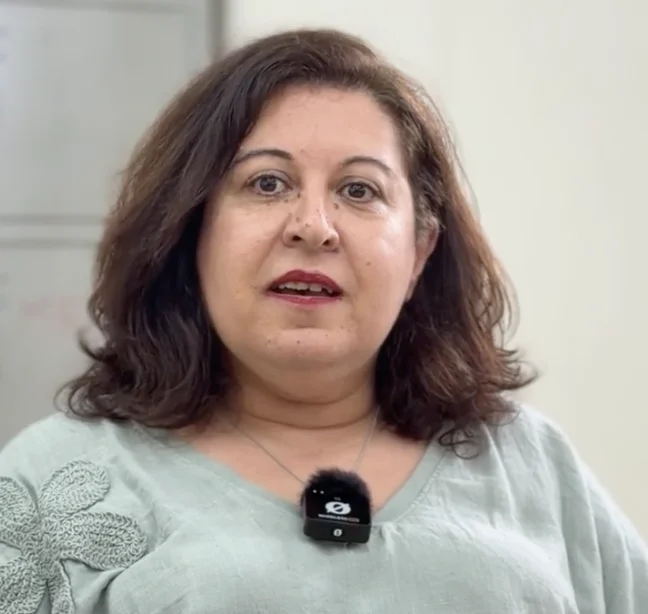
Teacher: Ms. Lina Marcos
To protect the privacy and dignity of the child and his family, he is referred to throughout this story simply as “the boy.”
About the ALS Project: Funded by Expertise France, Their World, and Education Above All, the Alternative Learning Spaces project trains teachers in self-directed learning methodologies and digital content.
Who
“Boy” is eleven years old and is on the autism spectrum. He did not speak in class. He did not answer questions. He did not look his teacher in the eye. His presence in the room was quiet and apart, as though an invisible wall stood between him and everything happening around him.
His teacher, Ms. Lina Marcos, had been working with him patiently, as she does with all students who need more time, more space, more gentleness. She is part of an inclusive school, one that believes, in practice and not just in policy, that every child belongs in the classroom. But she will be the first to admit that she did not know what would reach him.
Where & When
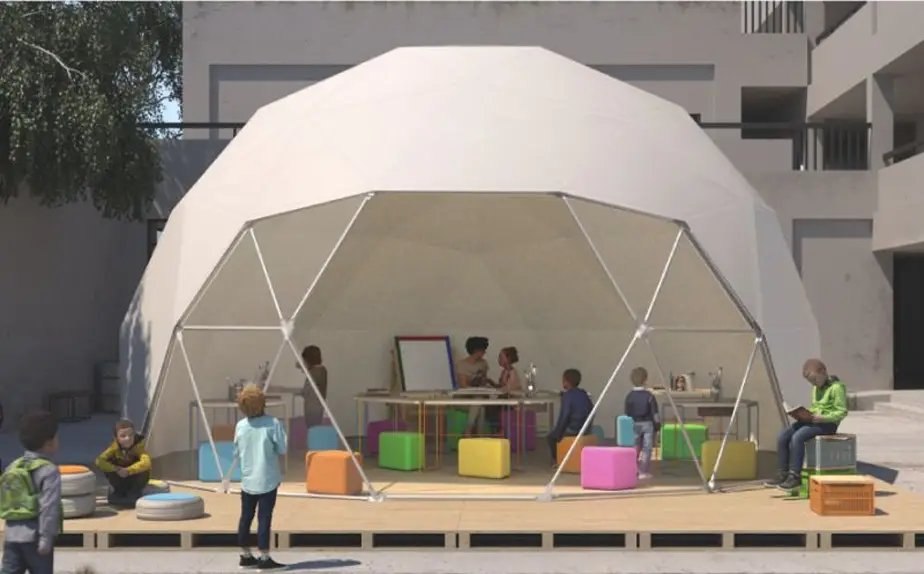
Ms. Lina and her colleagues completed the full Alternative Learning Spaces training, learning to use Tabshoura digital learning platform, to implement SEL activities and address the wellbeing of the students, and to support students in taking ownership of their own learning. The school had also received, through Education Above All support, a learning dome, digital devices, and an offline Beekee Box that made content accessible without an internet connection. The training and the tools were in place. Then the war came.
What happened during the war
When the 2026 conflict forced families across Lebanon from their homes, and the school building was converted into a shelter for displaced people, Ms. Lina and her colleagues moved learning online, using Tabshoura digital content they had been trained to deliver remotely. And then something happened that Ms. Lina was not prepared for.
“He was the first one to connect. Every single session, before anyone else, he was already there.”
Ms. Lina Marcos, teacher
The boy, who had never spoken in class and never raised his hand, became the first to log on. Then, slowly, he began to answer questions — not once, timidly, but regularly and with growing confidence. He reacted to what he saw on the Tabshoura platform. He shared his thoughts. Suddenly and undeniably, he was present.
What the screen offered that the classroom didn’t
The self-directed learning approach allowed him to engage on his own terms and at his own pace, without the sensory pressure of a crowded classroom or the anxiety of being constantly observed. The screen became a safe space where he could think, respond, and participate freely, without the social weight that had always made traditional learning so difficult for him.
Session after session, Ms. Lina watched a child she had known for years reveal himself to be curious, engaged, and eager to learn. He had never been disconnected from learning. He had simply needed a different door to access it.
What happened after the war
When the displaced families were eventually relocated and the school reopened its doors, Ms. Lina wondered what would remain of what she had witnessed. Would the boy retreat again behind his wall once the physical classroom returned?
He did not.
“He came back a different person. He participates in class now. He raises his hand. He started sharing what he is passionate about, what he discovered, what he wants to know next.” Ms. Lina Marcos, teacher
The experience of learning autonomously on Tabshoura, moving through content at his own pace, choosing what to explore, building confidence question by question, had made him, in the fullest sense, a participant in his own learning.
Why it matters: inclusion in practice
As a teacher in a school committed to inclusive education, Ms. Lina has seen many children with learning differences struggle in environments that were simply not designed with them in mind, classrooms that are too loud, too socially demanding, too rigid in the pace and format they impose on every student equally.
“Many children with learning difficulties benefited from learning at their own pace, autonomously, on Tabshoura. But this boy’s story, this was something else. This was outstanding.” Ms Lina Marcos, teacher
What the ALS project’s approach and Tabshoura in particular offered was not a workaround or a consolation. It was a genuinely different model of learning: one that placed the child at the center, allowed them to set the pace, and removed the social and sensory pressures that can make a traditional classroom nearly impossible for some children to navigate. For children with learning difficulties, that difference is not marginal. It can be transformative. For this particular boy, it was.
Life before and after
Before the ALS project, the boy’s story was one of invisible presence, a child who was in school but could not fully be in school, whose inner life remained entirely his own because no format had yet been found to welcome it out. Teachers cared, the school was inclusive in spirit, but the tools available were the tools of a traditional classroom, and those tools did not fit him.
After the training, the platform, the war, the remote sessions, the return, he is a child who speaks. Who asks questions. Who has, it turns out, passions he has been carrying silently for years, waiting for someone to make space for them.
Ms. Lina Marcos smiles when she talks about him now. There is something in her voice that goes beyond professional satisfaction, a kind of wonder, the feeling of having witnessed something that reminded her why she became a teacher in the first place.
“I knew he was in there. I just did not know how to reach him. It turned out the answer was to give him the space to reach us.” Ms. Lina Marcos, teacher
During times of crisis and war, a boy who could not speak in class has found his voice. That is not a small thing. That is what education is for.
Among the students was a child on the autism spectrum who had, until then, remained largely withdrawn in the classroom. He rarely participated, seldom engaged, and often seemed disconnected from the learning environment.
Yet, when learning shifted online, something changed.
According to his teacher, he was often the first to connect to the sessions. Slowly but surely, he began to engage, listening, responding, and eventually participating. For the first time, his voice was heard. The digital environment provided him with a space where he felt comfortable, safe, and in control, enabling him to connect in ways that had not been possible before.
What began as a response to crisis became an opportunity for inclusion.
This experience is a powerful reminder that when the right tools and support systems are in place, every child, regardless of their challenges, can find their path to learning, expression, and belonging.
